Some of the grandest places on this planet are not only in the United States, but specifically in our beloved national parks. These places need little introduction: the South Rim of the Grand Canyon, Half Dome in Yosemite, the hot springs and Old Faithful inside Yellowstone, Lake McDonald in Glacier and General Sherman in Sequoia.
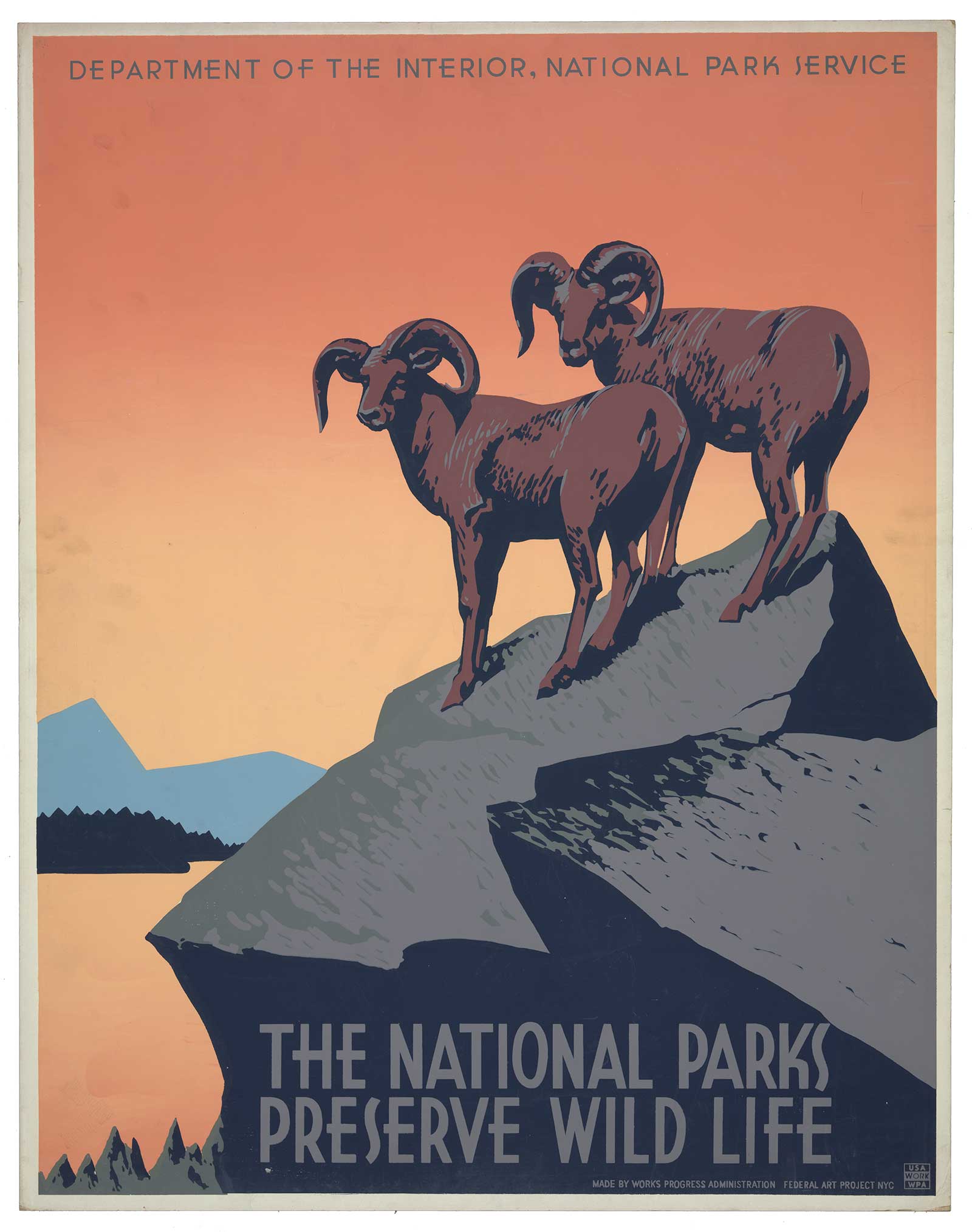
Preserve Wild Life poster, August 23, 1939, silkscreen print on board, Work Projects Administration Poster Collection (Library of Congress). Designed by J. Hirt. Library of Congress, 98518597.
When European explorers gazed upon these locations, their first instincts were awe and wonder. And their second instincts were ones of protection. George Catlin may have been the first to suggest these locations be preserved and protected. Albert Bierstadt and Thomas Moran were not far behind him. When one of the first protection acts was signed into law, it contained phrasing that said the lands “be held for public use, resort, and recreation…inalienable for all time.”
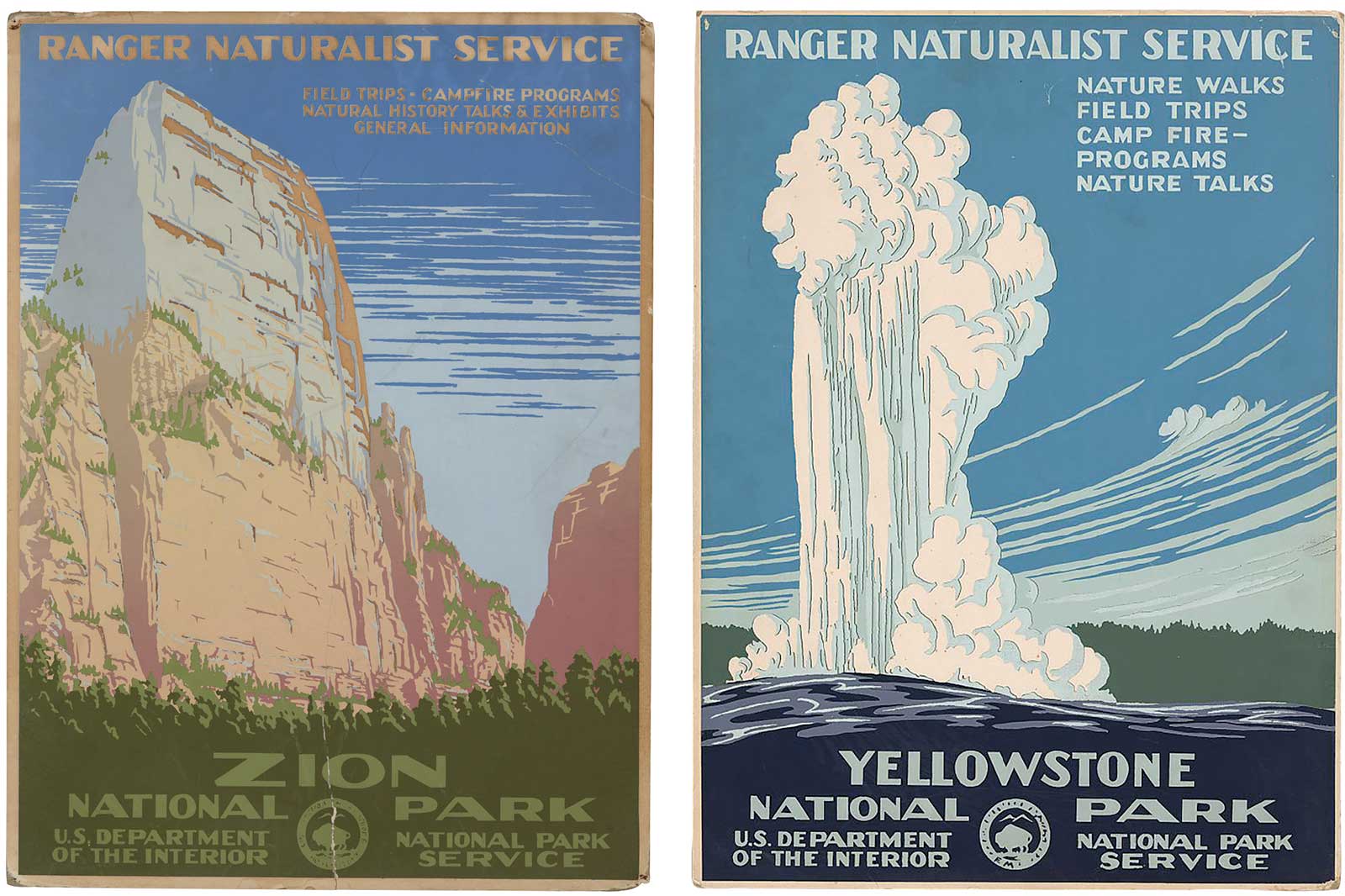
Zion National Park, Ranger Naturalist Service, ca. 1938, color screenprint, Work Projects Administration Poster Collection (Library of Congress). Designed by C. (Chester) Don Powell and printed by Dale Miller. Library of Congress, 2007676134.; Yellowstone National Park, Ranger Naturalist Service, ca. 1938, silkscreen print on board, Work Projects Administration Poster Collection (Library of Congress). Designed by artist C. (Chester) Don Powell and printed by Dale Miller. Library of Congress, 2007676133.
“For all time” really packs a punch. These lands are ours forever. And they are for everyone. The bird watchers and sightseers, the hikers and canoers and rock climbers, and the grizzly guides and moose trackers. They are for the veteran campers, those who trek deep into the wilderness with a full pack, and also for the afternoon picnickers smushed into a station wagon with howling kids, 24 pieces of mismatched luggage and an ice chest full of sandwiches. They are for research scientists, including zoologists, biologists, geologists and botanists. And they are certainly for artists, who are inspired by the land and its wildlife. The original visitors were artists, so it’s fitting that art continues to play a role at the national parks.
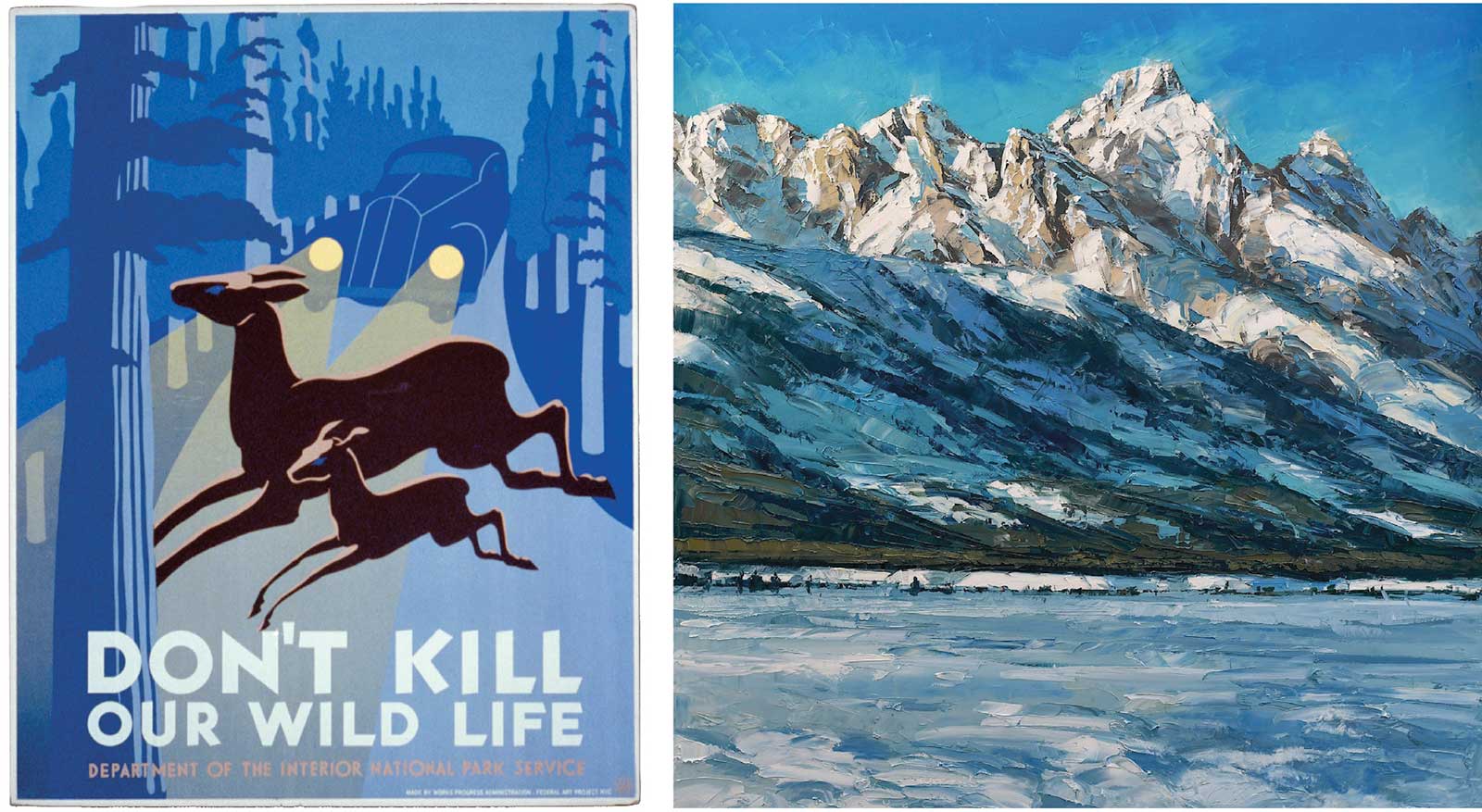
Don’t Kill Our Wildlife, ca. 1936-1940, color screenprint on board, Work Projects Administration Poster Collection (Library of Congress). Poster design attributed to John Wagner. Library of Congress, 92509203; Gallery Wild, Highlights, oil on canvas, 40 x 40 in., by Caleb Meyer.
Of course, these parks are ours, but that also comes with the responsibility of protecting the parks, preserving them and guaranteeing their continued preservation for future generations. Some of this is very simple, the “leave nothing but footprints” variety of safeguarding. But we must also do more, including holding our leaders accountable for these lands and what happens to them. Yellowstone National Park, the first national park, was created in 1872. More than 150 years later, and it’s still a beacon to the beauty of this country. Let’s keep that streak going. Conservation, funding, staffing at the parks, renovations, upkeep of the facilities—the parks need a lot of care. We have to support it if we want to keep them running.
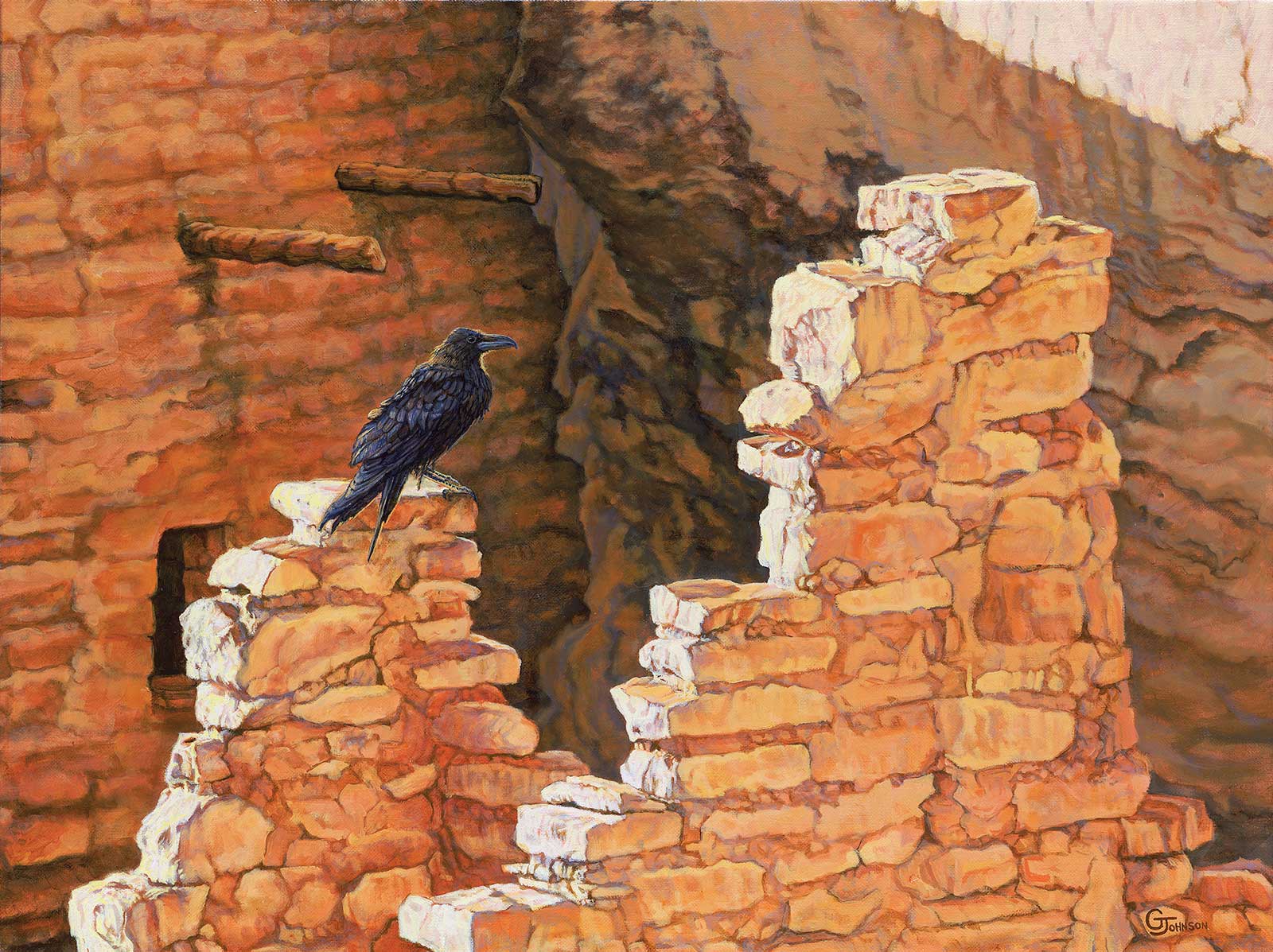
Gary Johnson, In Respect for the Ancestors, oil on linen, 24 x 30 in.
Artists certainly come into play here. Their works not only inspire people to go to the places in their paintings, but they encourage us to take them seriously. Some of the most iconic works of American art are from Yellowstone, the Grand Canyon and Yosemite. These works are in the most important American museums in the country. While those pieces are likely to remain there, other works are more accessible—so accessible that you can own them. And we encourage you to explore these works here in this section. (Also, it’s still spring. It not too late to plan a trip to a national park).
Gallery Wild for instance, based in Jackson Hole, Wyoming, and Santa Fe, New Mexico, acknowledges that national parks have long been a source of inspiration for contemporary Western artists, serving as both muse and mission. These vast, untamed landscapes provide not only breathtaking scenery but also a deep well of artistic and environmental inspiration. Patricia A. Griffin, a celebrated artist at Gallery Wild, draws from the raw beauty of Grand Teton National Park, where her studio is just a stone’s throw from its rugged peaks and abundant wildlife. Griffin’s portraits of her neighborhood bison herds, bears, moose and occasional wolves, capture the majesty of wildlife in the Tetons.
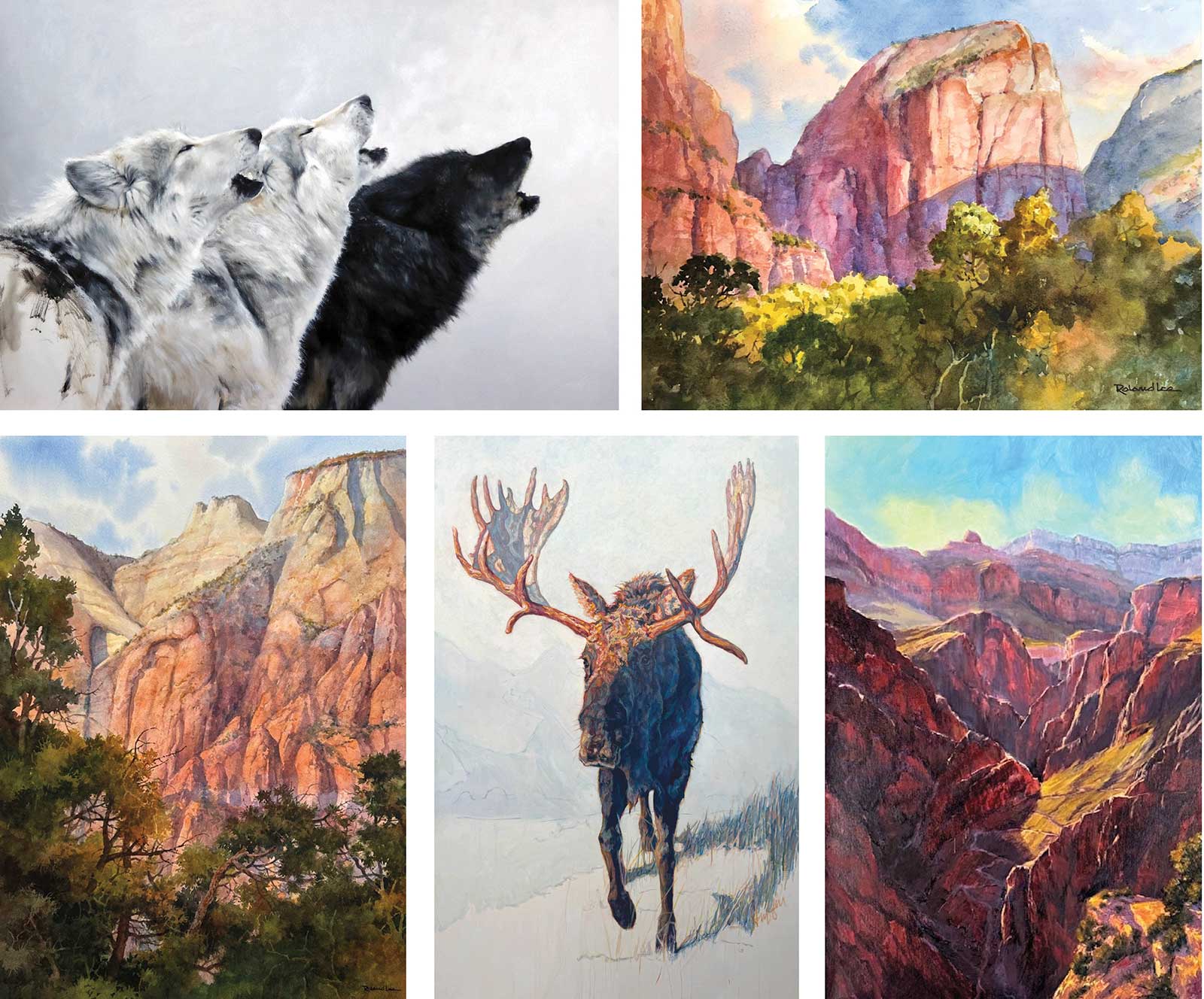
Top: Gallery Wild, Winter Rhapsody, oil on canvas, 40 x 60 in., by Doyle Hostetler; Roland Lee, Angels Landing at Peace, watercolor, 10 x 14 in. Bottom: Roland Lee, Rugged Grandeur, watercolor, 30 x 22 in.; Gallery Wild, Mornin’ Hoback, oil on linen, 72 x 48 in., by Patricia A. Griffin; Dawn Sutherland, Into the Canyon’s Heart, oil, 30 x 20 in.
National Parks with their ever-changing light and untamed wilderness, fuel additional Gallery Wild artists like Caleb Meyer and Doyle Hostetler. Through creation, artists foster a connection between the viewer and the wild, advocating for conservation through creativity. By taking a painting or sculpture, inspired by these wild places, collectors can be continuously inspired by these lands. “At Gallery Wild we hope this connection between fine art and national parks can inspire continued conservation of all things wild,” notes gallery representatives.
Artist Roland Lee has traveled and painted all over the world. “There are many exciting places where I found myself enthralled by what I was seeing,” he says, “but coming home to the land of cliffs and canyons always surrounds me with peace. I have painted in most of the national parks and monuments on the Colorado Plateau, each with its own special features. I have walked their trails, sat quietly by their rivers and explored their mesas. I have witnessed orange sunrises and golden sunsets, scorching summers and icy winters, and seen pine trees spring out of the earth, starting their climb to the sun. I have been visited by mule deer, bighorn sheep, giant condors and even a bobcat. Each day in the national parks is a wonder.”
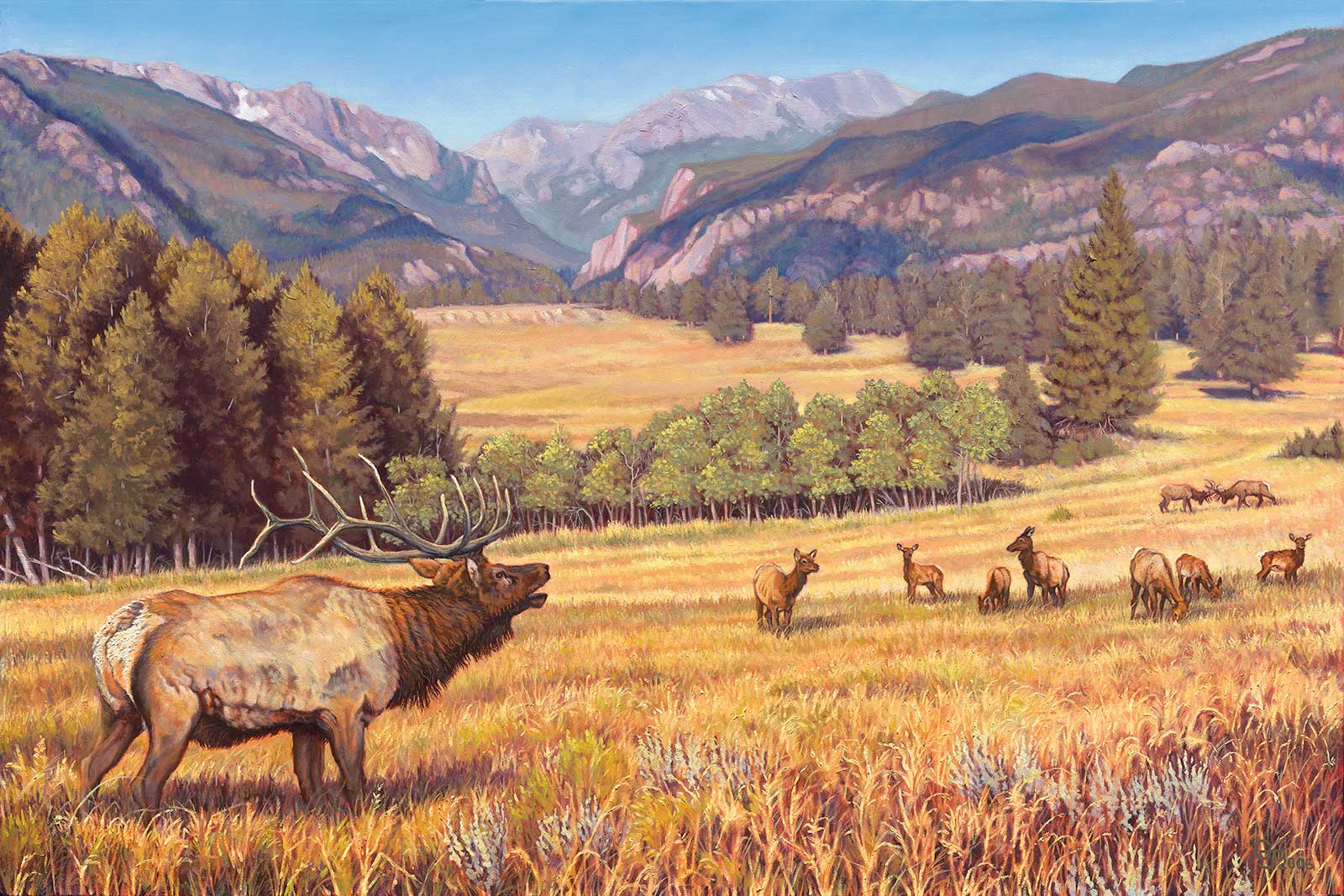
Gary Johnson, Who’s the Boss?, oil on linen, 24 x 36 in.
Dawn Sutherland senses the Grand Canyon throwing down a gauntlet every time she carries her painting gear to the rim or floats down the river, as if to say, ‘“Just try capturing my majesty on canvas!’” says the artist. “Changing colors, shifting shadows, textures that weave through the geologic layers, all presenting a never-ending test to see if I am up to the challenge. Years of practice and painting in all weather conditions have taught me that the canyon is composed not only of magnificent formations but is also defined in subtleties—light reflecting from one surface to another, vegetation describing the slope of layers and intriguing reflections on the water. The canyon’s challenges are unlimited and opportunities to express this beauty are limitless.”
The National Park system has been an integral part of Gary Johnson’s creative life from the beginning of his art career. “My artwork is nature inspired, be it wildlife, landscape or a combination of both subjects,” he shares. “Much of my creative ideas are formed while in a national park. I have been fortunate to be the artist in residence at the Rocky Mountain National Park in 2005 and Mesa Verde National Park in 2012. As artist-in-residence, you have full access to the park, and you donate a painting inspired by your residency to the park as part of their on-site museum permanent collection.
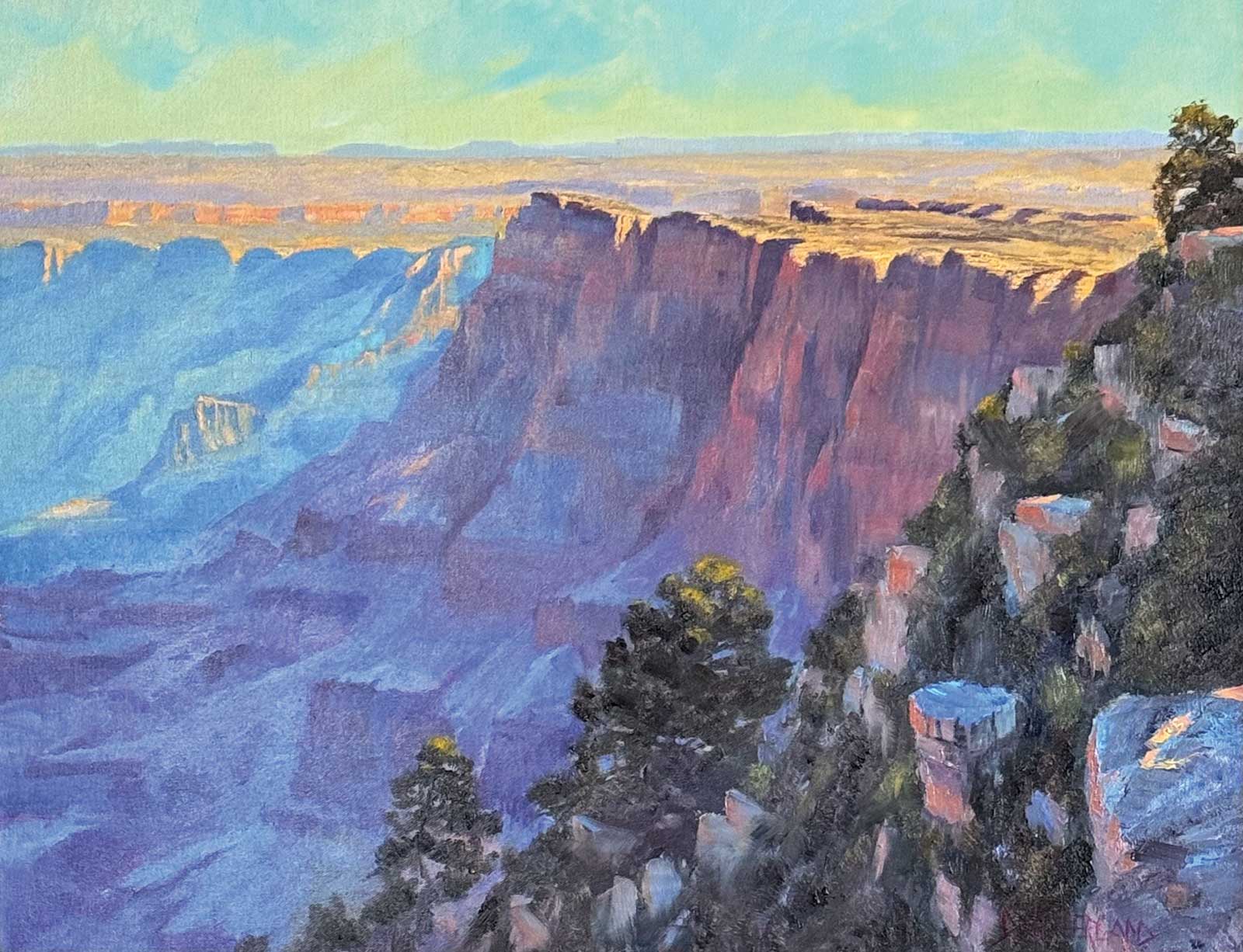
Dawn Sutherland, Where Time Stands Still, oil, 22 x 28 in.
Johnson’s piece, Who’s the Boss?, depicting a bellowing bull elk among a sprawling landscape, can be found at the Rocky Mountain Park Museum; and In Respect for the Ancestors, showing a raven among ruins, is at the Mesa Verde National Park Museum. “Our country’s national parks have given so much to me and those who visit them,” says Johnson, “so it is one of my great honors to give back and have my artwork part of the national parks legacy.” —
Featured Artists & Galleries
Featured Artists & Galleries
Gallery Wild
info@gallerywild.com
www.gallerywild.com
Jackson Hole, WY, (307) 203-2322
Santa Fe, NM, (505) 467-8297
Gary Johnson
(760) 402-9986
www.garyjohnson.com
National Park Service
www.nps.gov
Roland Lee Studio
www.rolandlee.com
Dawn Sutherland
Flagstaff, AZ, (928) 593-0604
www.dawnsutherlandfineart.com
Powered by Froala Editor


